First something people
pay for.
For founders and businesses who want a SaaS product or MVP built. I start with one core flow that customers use and pay for, on a foundation that can later handle teams, subscriptions and many customers. That way the MVP grows into a platform instead of being rebuilt a year from now.
Logged in as the contact at Jansen BV. Sees only their own projects, and margin is not customer information.
| Project | Status | Revenue | Margin | Actions |
|---|---|---|---|---|
| JAJansen BVoffice refit | In progress | €42,500 | hidden for this role | |
| JAJansen BVmeeting room | Quoted | €8,900 | hidden for this role |
2 of 6 projects · margin hidden · read only
using ( customer_id = auth.uid() )The difference is not hidden buttons. That rule in the bottom right sits in the database itself, so a tampered request from the browser gets nothing extra back either.
Where SaaS plans get stuck.
A year of building before the first customer
The plan has twenty features and none of them has been tested with someone who pays. When the first customer arrives, they need something else.
An MVP you have to throw away
The first version worked, but without accounts per organisation or a clean database. Adding teams means starting over.
Stuck in a no-code tool
Bubble or Lovable got you far quickly, until you needed subscriptions with a trial, permissions per role or real speed.
Customer A sees customer B's data
Separation between customers lives in the interface, not in the database. One forgotten filter and it is a data leak.
Billing by hand
Subscriptions, mid-month upgrades and failed payments are tracked in a spreadsheet. That scales to about ten customers.
Code in the agency's name
The product is yours, but the repository and the servers are not. Moving to your own team becomes a negotiation.
From idea to a product that earns money.
Asking and cutting
Which problem you solve, for whom, and what they pay for. Whatever does not contribute to that moves to later. A good part of the scope often falls away here.
The foundation right
Organisations, roles and data separation are in the database from day one. That costs little extra in the first version and saves a rebuild later.
Building in short rounds
A demo on a real environment every two weeks. You use the product before it is finished and steer on what you see.
Live with first users
A soft launch with a few customers, quick adjustments based on their feedback, and further development after that if you want it.
Start with one flow people pay for
A good MVP is not half a version of the whole plan. It is one route from start to finish that a customer completes on their own: sign up, do the one thing they came for, and pay. If that works, you know more than a year of planning would have told you.
What I do get right from the first version is what you cannot change cheaply later: how customers and their data are separated, how accounts and roles work, and how payments come in. Screens and features can then be added one at a time.
One core flow
One task a customer completes from start to finish, without you having to sit in between.
Payments from the start
A Stripe integration with a subscription and a trial. Whether people pay is the only test that counts.
Data per organisation
Separation between customers in the database itself, with row level security in Supabase, not only in the interface.
Room to grow
Teams, roles and an API are added on the same foundation, without the first version having to go.
MVP or full SaaS platform
The difference is not in the technology underneath, which is the same with me. It is in how much sits on top. An MVP is the first version of the platform, not a throwaway project.
| MVP | SaaS platform | |
|---|---|---|
| Goal | Prove that people pay | Grow with customers who stay |
| Features | One core flow | Several modules around that flow |
| Customers and data | Separated per organisation | Separated per organisation |
| Accounts | Sign-in, possibly one role | Teams with roles and permissions |
| Payments | One subscription with a trial | Several plans, up- and downgrades, per seat |
| Integrations | Only what the core flow needs | Webhooks and your own API |
| Admin | Basic admin for you | Admin dashboard and audit log |
| Timeline | Shorter, depending on the core flow | 8 to 16 weeks |
No-code, AI builder or custom?
Honestly: for some MVPs Bubble or Lovable is enough. If you want to know whether anyone wants your idea at all, or you need a handful of test users or a demo for investors, a tool like that is faster and cheaper than hiring me.
The ceiling comes when the product starts getting real use. With Bubble your app runs on their platform and you cannot take the code with you. Lovable does give you code, but it is rarely built for many customers with isolated data, roles and billing that adds up. If you already have a prototype, vibecode to production is often a shorter route than starting over. The difference between the tools is in Lovable vs Claude Code.
| No-code or AI builder | Custom MVP | |
|---|---|---|
| First version | Days to weeks | Weeks |
| Good for | Testing an idea, a demo, internal use | Paying customers and growing |
| Isolating data per customer | Hard or manual | Handled in the database |
| Subscriptions and trials | Basic | As complex as your model |
| Taking the code with you | Bubble no, Lovable yes | Yes, repository in your name |
| When it gets busy | You hit the limits of the platform | You scale the database and hosting |
My own SaaS as proof
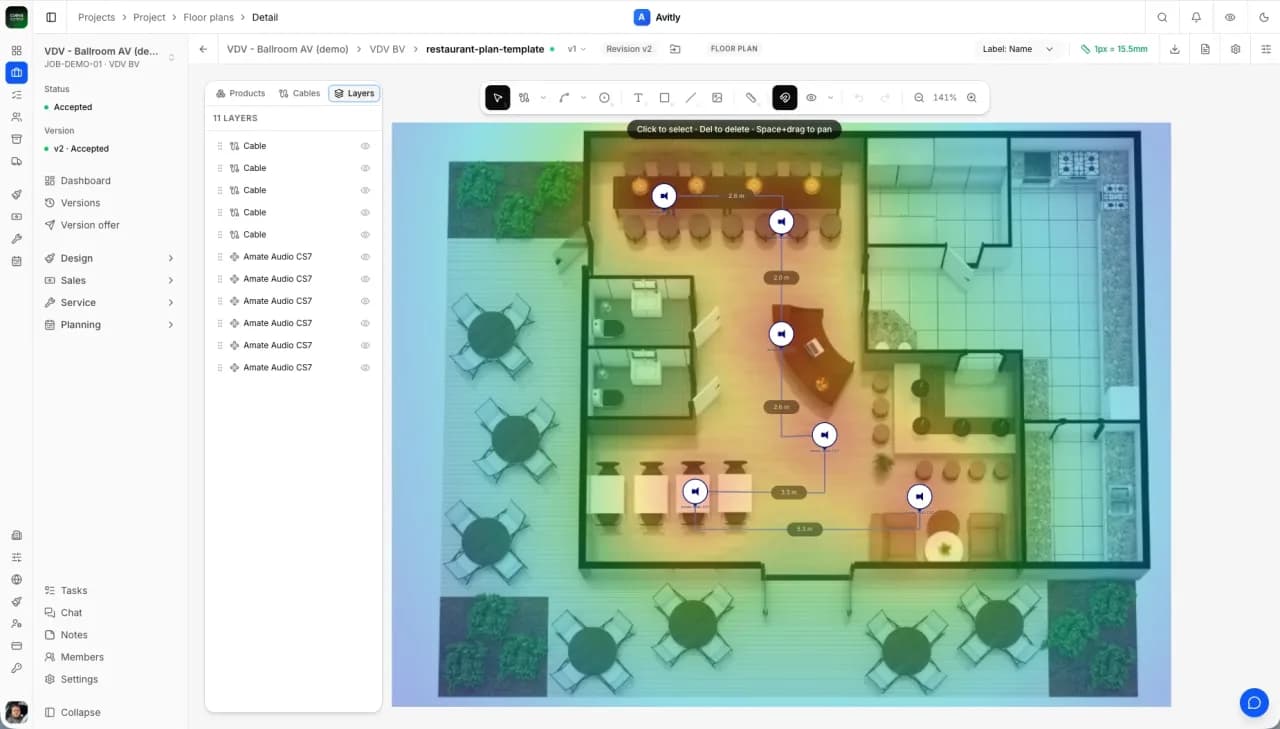
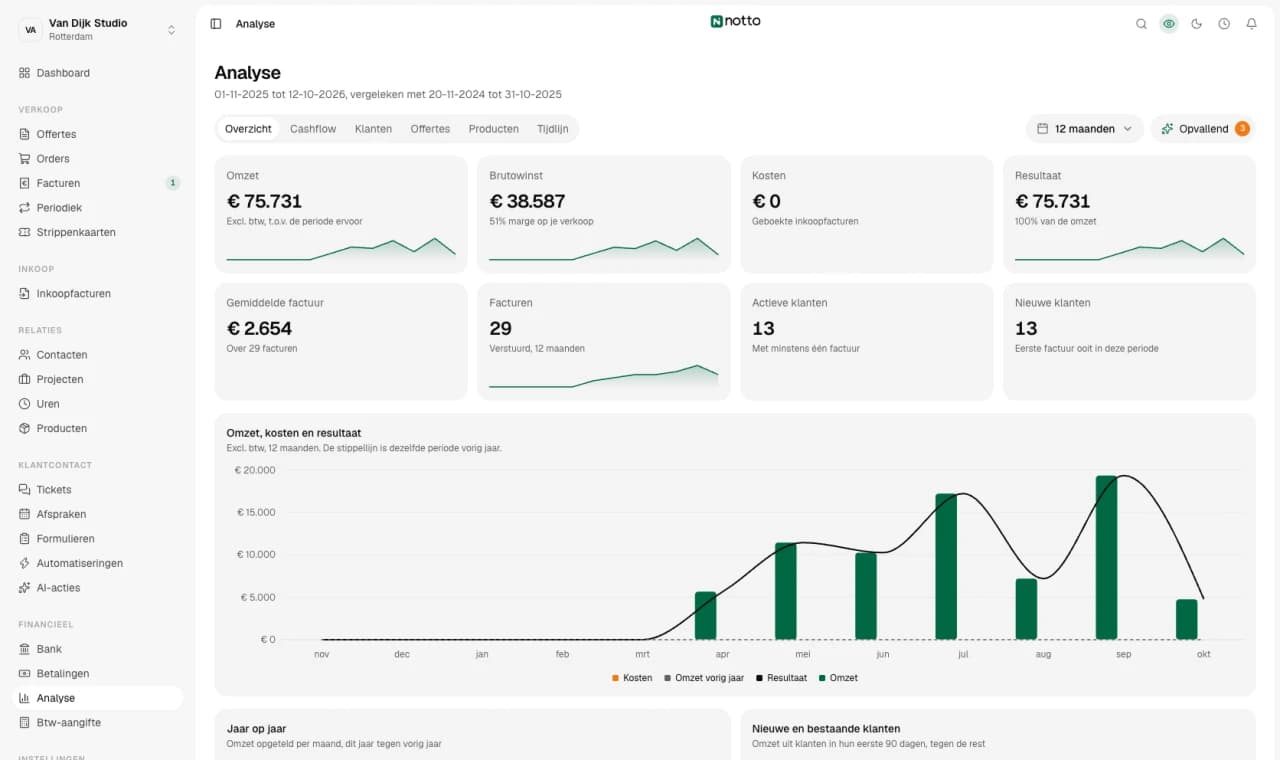
Avitly is my own SaaS for AV and IT integrators, with Stripe subscriptions built in, and I use it every day in my own AV company. Notto is my second product: quotes, invoices and VAT for small businesses, currently in beta. Everything on this page I went through there myself, including the choices I would make differently in hindsight.
Honest about scale: I am one developer, not a team of eight. That means short lines and no handovers between people, but also that I do not build ten products at once. How this compares to other custom software and roughly what it costs is on what custom software costs.
SaaS products in the real world
Clients rate me 5 stars on average.
“I am extremely happy with the result of my new website for DoubleStreet Australian Cobberdogs, made by Webframer. From first contact, Webframer radiated expertise and creativity.”
“Webframer helped me enormously with the Veldvisuals website. It is not only good to spar with Bas about building the site, but also in the aftercare and whenever changes have to be made. Recommended!”
“Great to work with. Listens carefully to what we want. When we ask for changes, they are made expertly.”
“Really pleasant to work with and short lines of communication!”
“The website looks great!! Definitely recommended!”
“Excellent! Fast service and good contact!”
Translated from the Dutch originals on Google.

I am Bas Voets. Since 2021 I have been building websites, client portals and business software for small and mid-sized companies, from Hazerswoude-Dorp in the Netherlands. From first call to launch you talk to me, not to an account manager.
What does it cost to have an MVP built?
What is the difference between an MVP and a SaaS platform?
How long does SaaS development take?
What exactly is multi-tenancy?
Should I start with Bubble or Lovable first?
What if I want to continue with my own team later?
Tell me what you want to build.
A half-hour call. You get an honest answer about what it costs, how long it takes and whether building it is smart at all.